
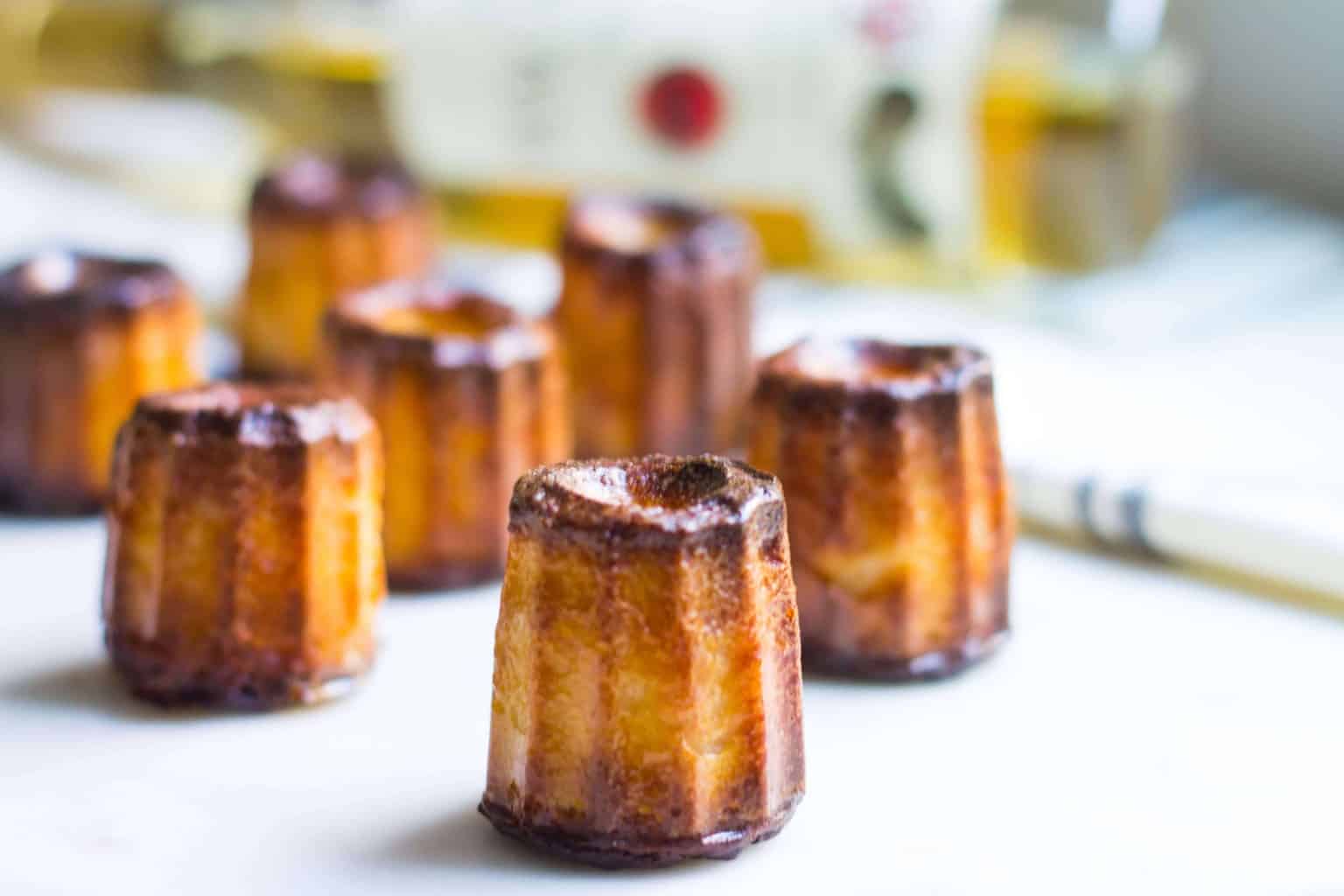
Canelés Recipe (Cannelés Bordelais)
Canelés, sometimes spelled as cannelés, are sticky, sweet rum cakes from the French region Bordeaux. That’s why they’re also sometimes referred to as cannelés bordelais. These little custard cakes are truly divine and a rare treat to find in the States.
Canelé | Cannelés
I had the opportunity to visit the Bordeaux region during my last trip to France. My best friend’s mother-in-law lives in that area, so we decided to take a weekend trip to visit her.
On the way to her house, I asked my friend to stop at a patisserie so that I could pick up something as a gift for the hostess. Instead, my friend encouraged me to stop at this tiny shop that sold some of the best canelés (a Bordeaux specialty) she had ever eaten.
I had of course heard of canelés, or cannelés (depending on how you spell it), having been to France before, but I had never come across them in Paris.
It turns out that canelés were even better than I imagined them to be; they were just as addictive as my friend described them to be!
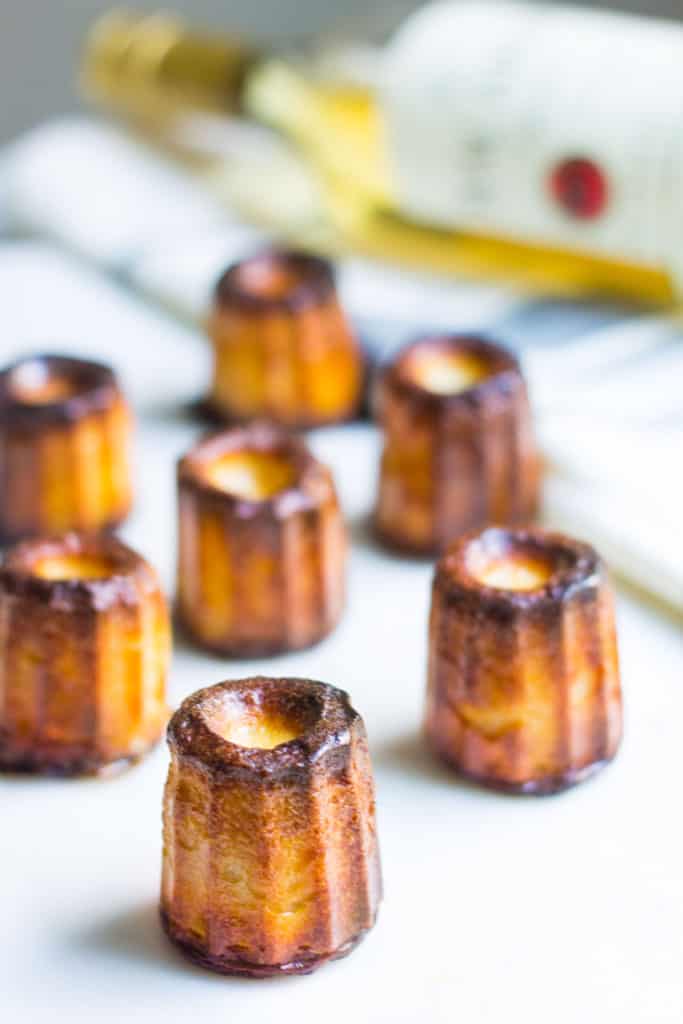
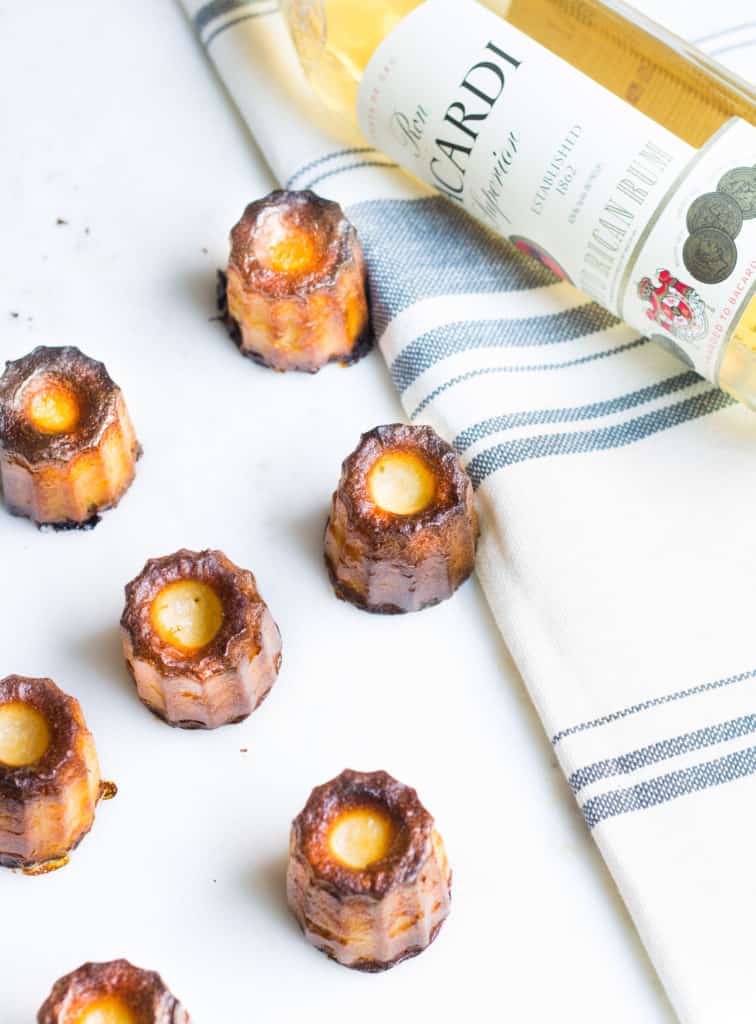
Canelé Recipe
During this weekend visit, my friend’s mother-in-law invited some of her own friends to join us for lunch one day. One of these friends was a sweet woman who shared her recipe for cannelés bordelais.
I told her about my blog and how I had fallen in love with these little rum cakes during my stay, and she kindly emailed me the recipe for this iconic Bordeaux dessert.
And what a recipe…these are divine!
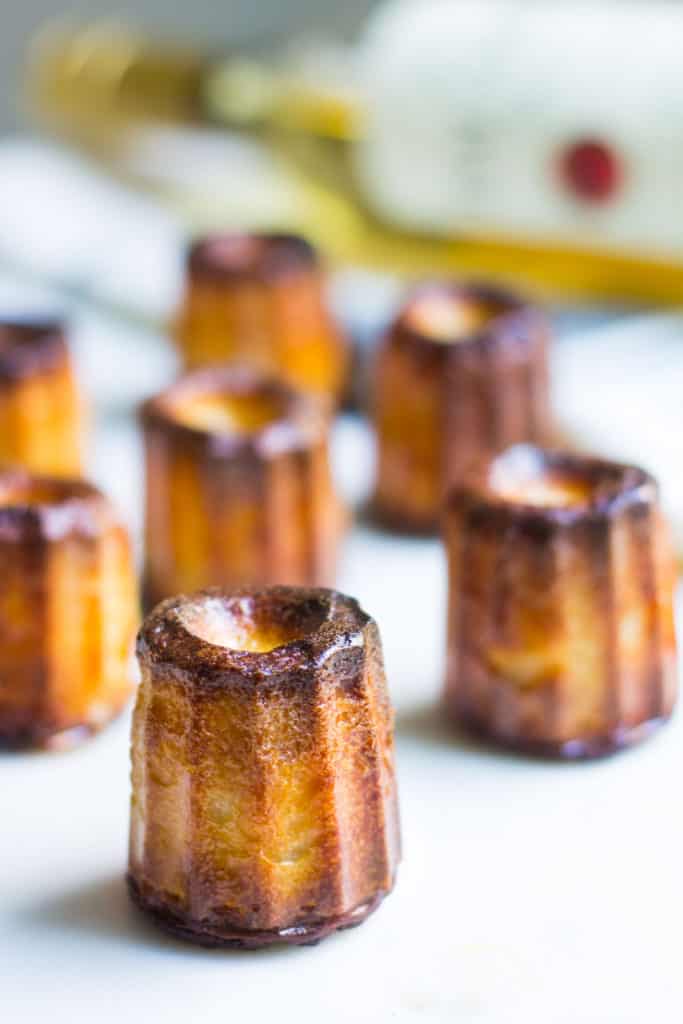
Canelé Mold
Now, normally, I’m not thrilled with the idea of purchasing specialty pans like the one needed for these, but you must have a canelé pan to make true canelés.
Some people use a copper canelé mold, as it’s very iconic and traditional to do such. I honestly love using a silicone mold for three reasons:
- The 100% silicone ones are easy to store (they are flexible and easily bend/fold)
- They’re easy to clean – just pop the pan in the dishwasher
- The silicone, or silicone coated ones, easy to get the canelés out of the pan – you just pop them right out
It was brought to my attention that some canelé recipes call for beeswax as a way of coating the canelé molds, but you really don’t need that. Finding an all-silicone, regular size canelé mold isn’t always easy, which is why I recommend going for a silicone coated one instead if you can’t find it.
And while buying a specialty pan might not typically be the most practical thing, I’m sure you will be getting much use out of your pan as these canelés are scrumptious.
Canelés are made with a generous dose of rum, then the batter is left to rest overnight where the rum flavor can develop even further.
The key to making canelés the addictive treat they are is the baking method.
You see, canelés have this unique quality where they have a sticky, caramelized-looking exterior and soft, custard-y interior. In order to achieve this perfect texture contrast, you have to bake the canelés at different temperatures for various durations.
Not everyone knows how to make a great canelé, and that’s why I was so grateful and excited to receive this authentic canéle recipe from my new French friend. I hope you guys enjoy these just as much as I do!
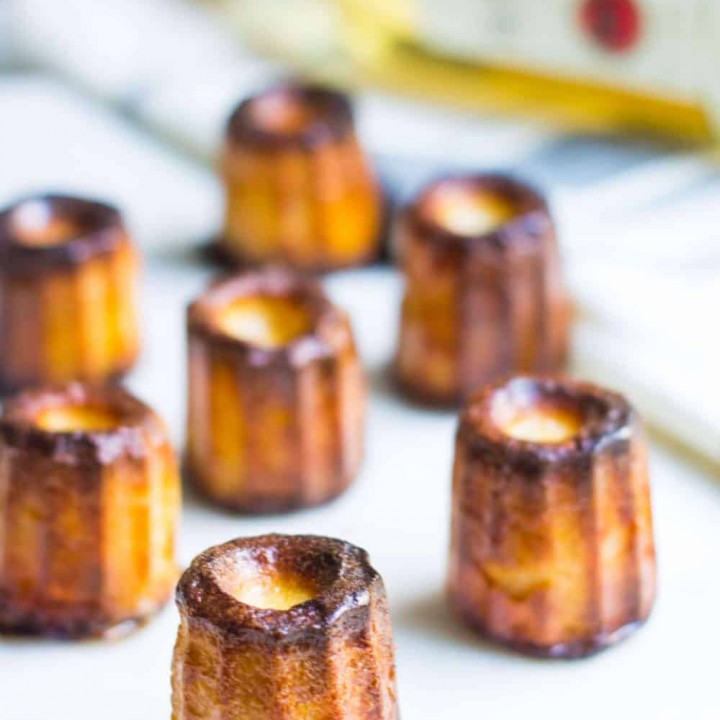
Canelés
A Bordeaux dessert specialty made up of rum-flavored, sticky little cakes.
Ingredients
- 500 ml milk, 2 cups + 2 tbsp
- 1 tbsp vanilla extract
- 2 whole eggs
- 1 egg yolk
- 125 g all-purpose flour, 1 cup
- 225 g granulated sugar, 1 cup + 2 tbsp
- 150 ml rum, 1/2 cup + 2tbsp
Instructions
- Combine the milk and vanilla extract; temporarily set aside.
- To a large bowl, add the eggs and egg yolk, then whisk until the yolks are broken up. Pour in the milk and vanilla mixture, then whisk again until combined.
- Add the all-purpose flour and sugar, whisking until smooth and lump-free.
- Add the rum and whisk again to combine. Refrigerate the batter for at least 12 hours, or overnight if possible.
- The next day, preheat the oven to 440°F. If using a silicone canelé pan, place the pan on a wire, oven-safe rack (this will make transferring the pan to the oven easier). Give the batter a whisk, then use a small ladle to fill the molds with enough batter to almost reach the top of the molds.
- Bake the canelés at 440°F for 20 minutes. Then reduce the heat to 300°F and bake for another 30 minutes. Finally, increase the heat to 430°F and bake for 5 minutes.
- Remove the pan from the oven and let the canelés cool in the pan for 30 minutes. Gently pop the canelés out of their molds and serve.
Nutrition Information:
Yield: 21 Serving Size: 21 ServingsAmount Per Serving: Calories: 41Total Fat: 1gSaturated Fat: 0gTrans Fat: 0gUnsaturated Fat: 0gCholesterol: 27mgSodium: 8mgCarbohydrates: 6gFiber: 0gSugar: 1gProtein: 1g

Shop tools for this Recipe:


I do not know this dessert but I’m sure it’s delicious because all the recipes I tested on your blog were simply tasty, you know how to choose recipes and I’ll test that too.
Thank you so much, Adrianny! You are so sweet. These are some of my favorite – I love their spongy texture and rum flavor. 🙂
Hi Beeta. This recipe and results looks spectacular. Your recipe says it yields 18 canelés but does not give their size…small, medium or large… and you said that you have the silicone pan and seem to really like it, so which one and size do you recommend as being best suited for your recipe?
I was also wondering if you have ever made a Gâteau Millasson and have a recipe. I have tried different recipes and have never been able to replicate the taste of this flan or obtain the light sandy blond surface color from the patisseries held in memory. Just hoping you may have be able to solve this grail. Have a great weekend.
Hi Lindsay! Thank you for the lovely feedback and great questions. I used a small silicone pan – the exact pan I used is the red Freshware one that I linked to at the end of the post. If you click on it, it should take you to to the Amazon page that I ordered it from. The pan has worked really well for me! 🙂
As for a gateau millasson, I have heard of it but have yet to try this specialty myself. I wish I had a recipe to share with you but because I’ve never tasted an original, I would not know what to expect out of a recipe for it. I dug around on Google a bit and found this site which has the recipe in French. It’s one of the few recipes that has a light, blond surface like you described (rather than a burnt/brulee-style top):
http://je.partage.mes.recettes.et.mes.astuces.over-blog.fr/article-millasson-ou-millassou-105795045.html
It is in French, so if you think you’re interested in trying it, please feel free to email me at contact@monpetitfour.com and I will be happy to email you a translated copy of the page. Otherwise, another site (also French) that has original French recipes is marmiton.org. I wish I could be more of help! I have to say that now I am incredibly curious to try this delicious-sounding cake! 🙂 Merci XO
Every time I read your blog I feel transported to a better time in a sunny area of France. And these look so perfect honey… Gorgeousness on a plate…I can almost feel their heavenly stickiness on my palate 🙂
You are too kind my dear! That is the best compliment I can get <3 XO
Tes canelés sont une merveille Beeta ! Dans ma famille, on les adore. Je les ai fait qu’une fois et il faut que je le fais à nouveau parce qu’ils sont à croquer à n’importe quelle heure de la journée ! xx
Oui! They stay fresh all day long! 🙂 I’m so happy I got to see you in Bordeaux as well, Eva <3
These are so gorgeous Beeta! Need to get my hands on some canelle tins asap – definitely worth it if I can sit down to one of these with my weekend coffee. I’ve only had one once, from a french market, and that caramelised exterior is something I still remember well. x
Thank you! They are addictive! I hope you get a chance to make them at home 🙂 XO
I dream of visiting the Bordeaux region some day. Betta, these look sublime. And I can say having that little pan on hand would be worth the extra real estate it occupies in the kitchen. What a treat! Thank you for sharing! xo
Thank you, Traci! Yes the pan is so worth it! Plus, I use a silicone one so it’s bend-able and easy to store away 🙂