
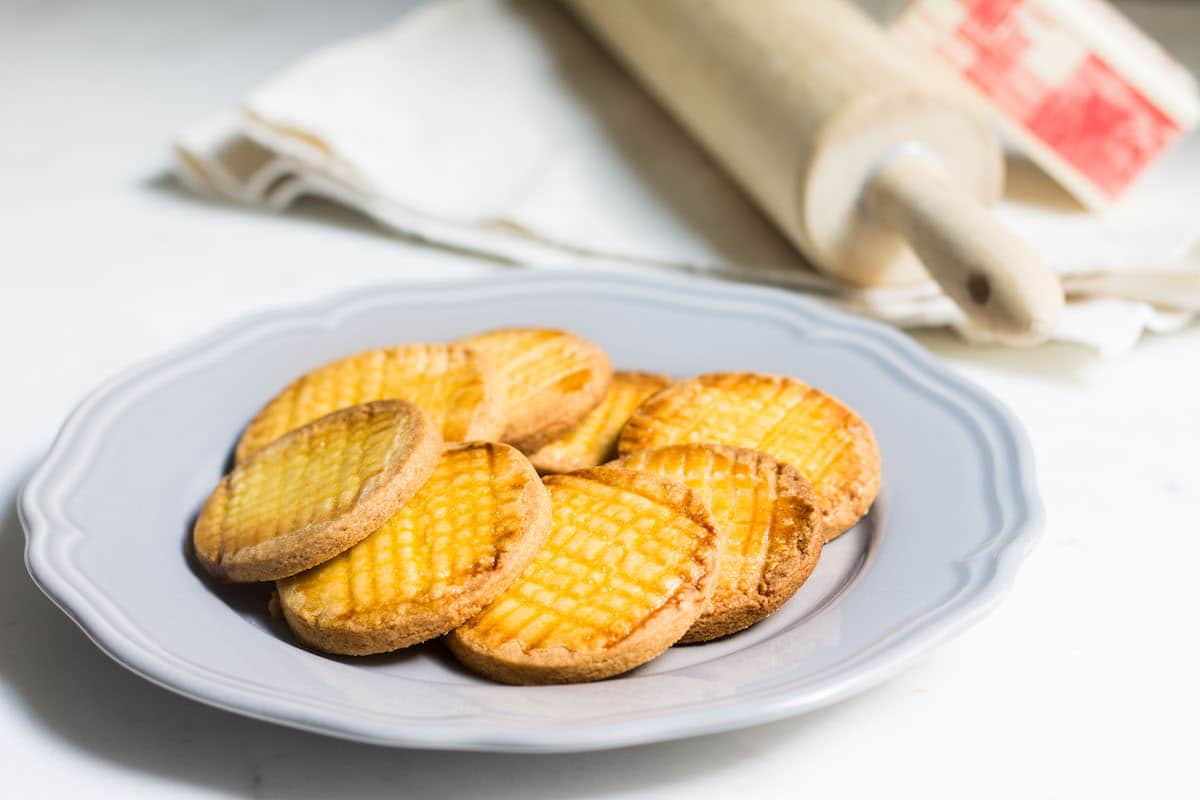
French Butter Cookies (Sable Breton)
Indulge in the rich buttery goodness of these French butter cookies, known as sablé Breton. Whether enjoyed with an afternoon coffee, tucked into a gift tin, or savored as a sweet finish to a meal, this recipe will allow you to enjoy these classic cookies at home in your own kitchen.
What are French Butter Cookies?
French butter cookies are French biscuits made with just a handful of simple ingredients: salted butter, sugar, flour, eggs, and a hint of vanilla.
Here’s what makes them special:
- Texture: Crisp at the edges, tender inside, with a crumbly, melt-in-your-mouth bite.
- Flavor: Rich and buttery, yet never overly sweet; the quality of the butter truly shines.
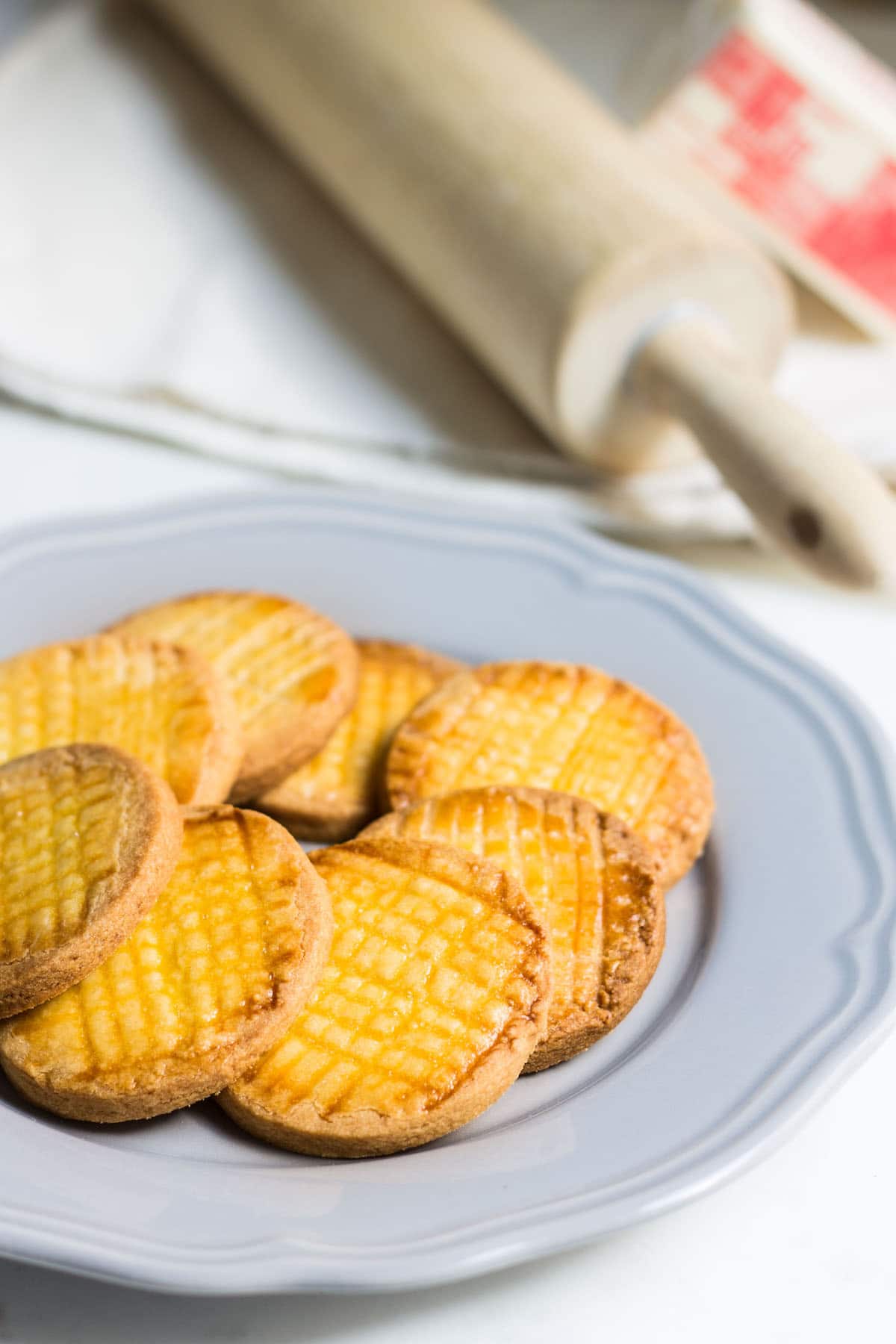
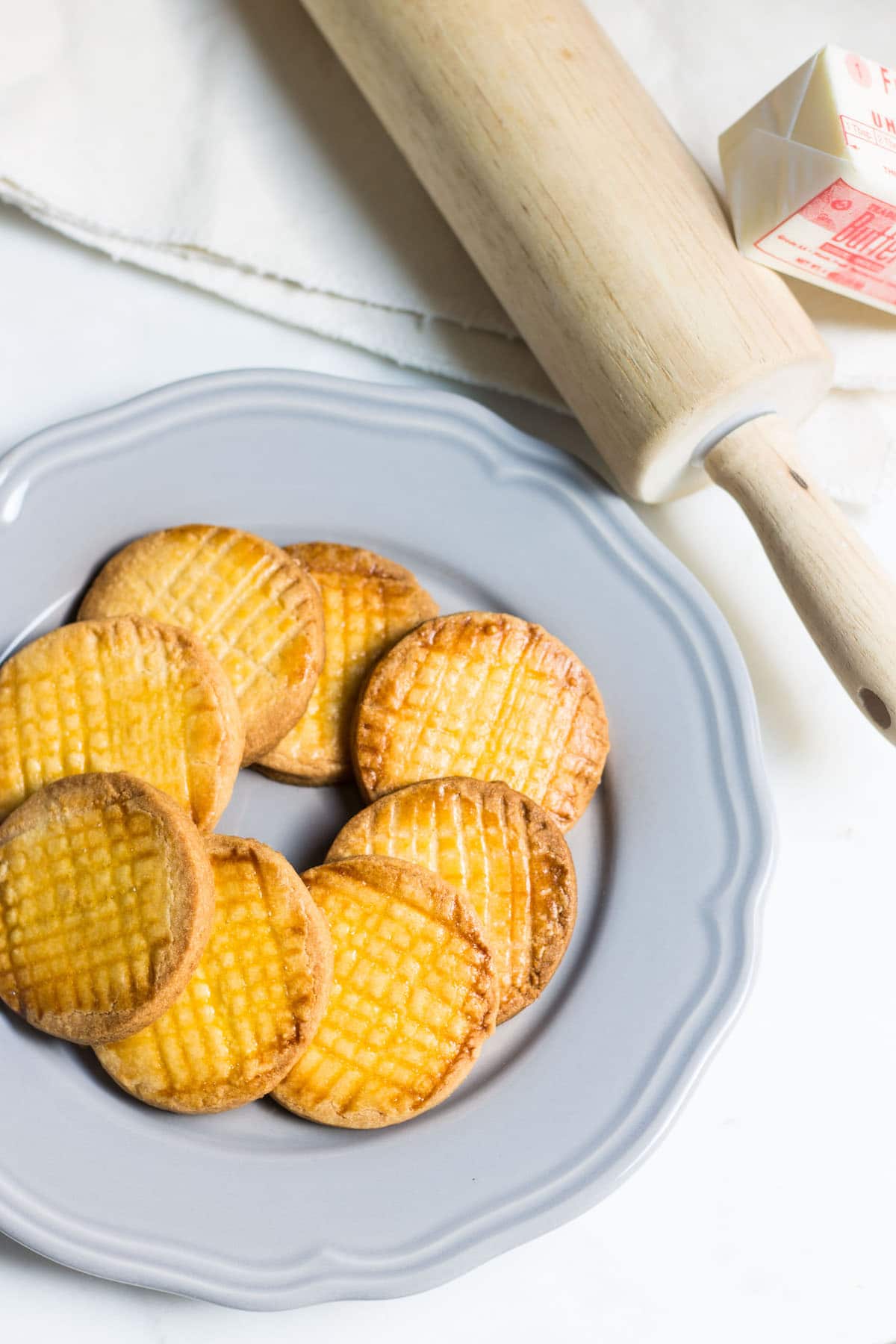
- Varieties: They can be plain and round (like the famous Sablés de Normandie), pressed with a fork for a rustic look, or cut into elegant shapes and glazed for a refined Parisian touch.
- Tradition: Originating in Normandy and Brittany (regions famous for their butter), they’re a staple in French households and pâtisseries.
What are French butter cookies called?
In France, these cookies are often called sablés from the French word for “sandy,” referring to their delicate crumb.
When they’re referred to as sablés Breton, they’re specifically referring to these French butter cookies since Breton, or Brittany, is a region famous for its butter in France.
There simply is no replacement for some good ol’ fashioned French butter when it comes to flavor and texture in a baked treat. The French know this. They revere it, in fact.
Softened, melted, clarified, salted – you name it, they cherish it.
To the French, these butter cookies are a dessert classic; they’re what chocolate chip cookies are to Americans.
You’ll find these French butter cookies in almost every grocery store in France. The really special ones are found in more upscale markets like La Grande Epicerie in Paris.
I first heard about them when my best friend’s French fiancé told me about a brand called La Mère Poulard.
They are famous for their buttery sablés, tantalizing shortbread cookies that melt in your mouth just as easily as they crumble between your fingertips.
Is French butter good for cookies?
While I normally stock up on unsalted butter for my baking needs, these French butter cookies are the one time I actually use salted butter.
To create these cookies, it’s best if you can use a French butter, as the butter is the star here, after all.
While using a generic salted butter brand won’t kill the recipe, why not let the star ingredient shine like it’s supposed to? That’s why I stand by saying it’s best not to skimp on quality here with this ingredient.
Other than the fancy butter, the rest of the ingredients are pantry ingredients you probably already have on hand.
Ingredients like all-purpose flour, sugar, eggs, and vanilla extract. It’s not a long ingredient list, but that doesn’t mean that these cookies make any less of an impact.
Easy Butter Cookies
I also love these French butter cookies because they’re a cinch to whip up.
You don’t have to pop the dough into the fridge or freezer beforehand. So many cookie recipes these days instruct you to refrigerate the dough overnight for best flavor and texture, but these French butter cookies don’t require any of that kind of patience.
Instead, you can create the cookie dough and roll it out in under 15 minutes, pop the disks onto a baking sheet, and then bake them in the oven for 15 minutes or less, making these a 30-minute project.
In fact, I tend to bake just a handful of them and freeze the rest for random cravings. If you want to do the same, I recommend rolling out the cookies, cutting out the round shapes, then freezing them on a sheet of parchment paper.
After about 10 minutes, when they’re frozen, pop them into a large ziplock bag in a single layer, using the parchment paper to separate the cookies if you choose to stack them.
Not only does it make for quick and easy cookies later, but it’s a great way to keep yourself from eating a whole dozen straight out of the oven!
As these cookies bake, they will crisp up nicely in the oven. Yet, the wonderful thing about them is that they will also instantaneously melt in your mouth (thank you, butter!).
What to eat butter cookies with?
I love having a couple of these cookies with an afternoon cup of tea or espresso.
All of my family and friends love when I bring out a tray of these delicious French butter cookies, especially when they know these taste as good as they look.
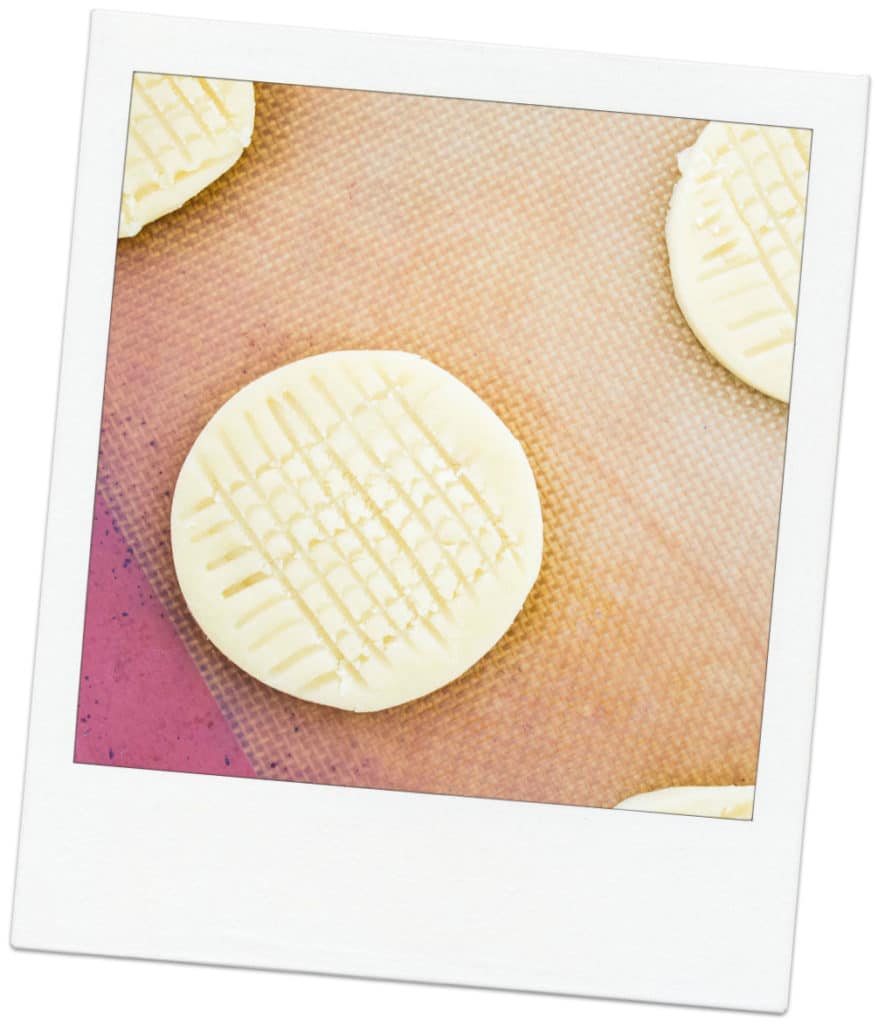
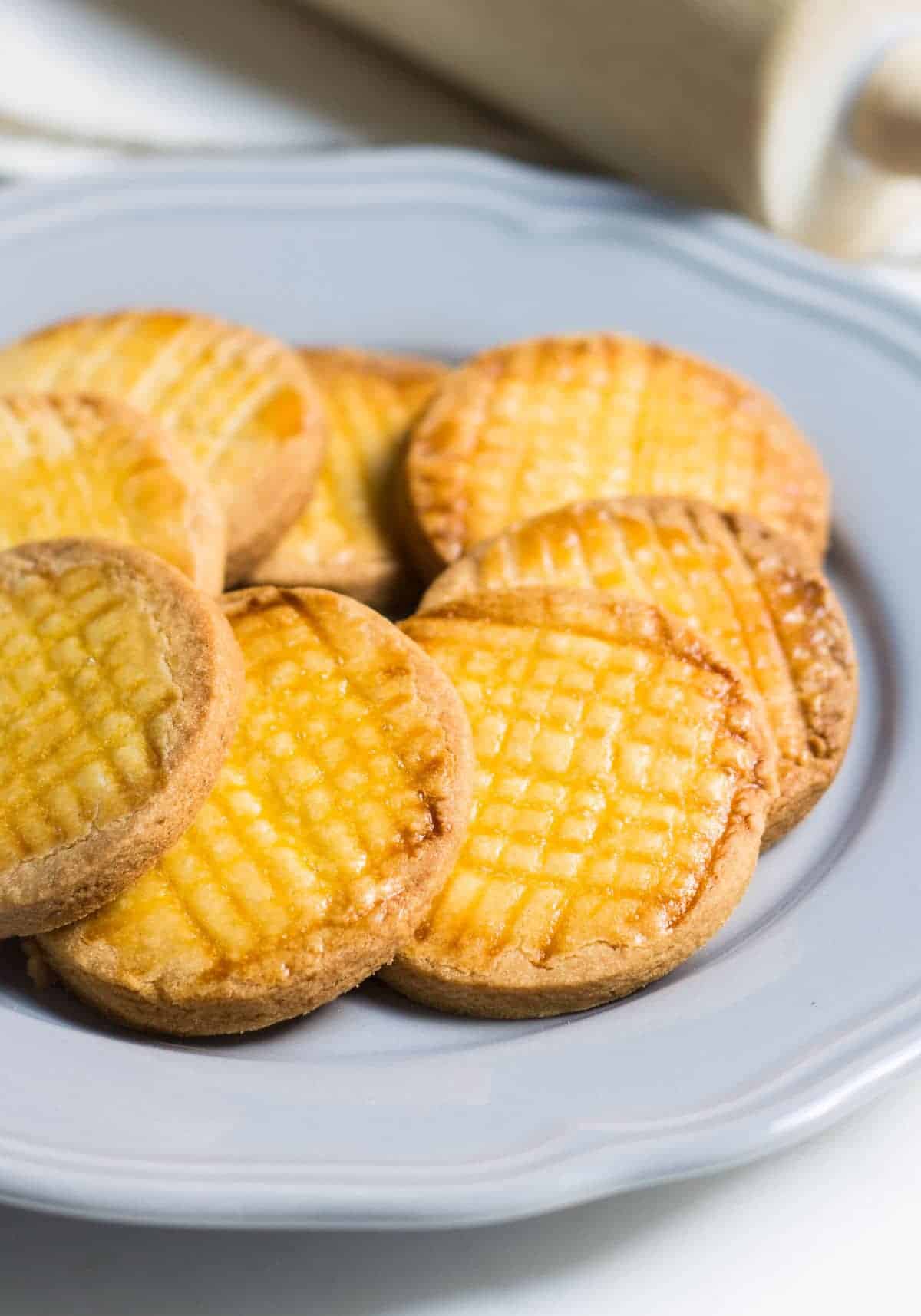
To create the cross-hatching pattern on top of the cookies, all you have to do is drag a fork down one way on the cookies, then drag them across in the opposite direction.
A brushing of a single egg yolk on top gives these cookies their glorious golden hue, making them look appetizing and radiant – the way these cookies truly are.
These French cookies are such a delight; it’s no wonder the French love these so much!
To store any extra cookies, you can either cover them on a plate with a sheet of plastic wrap, or place them in a ziplock bag (even better).
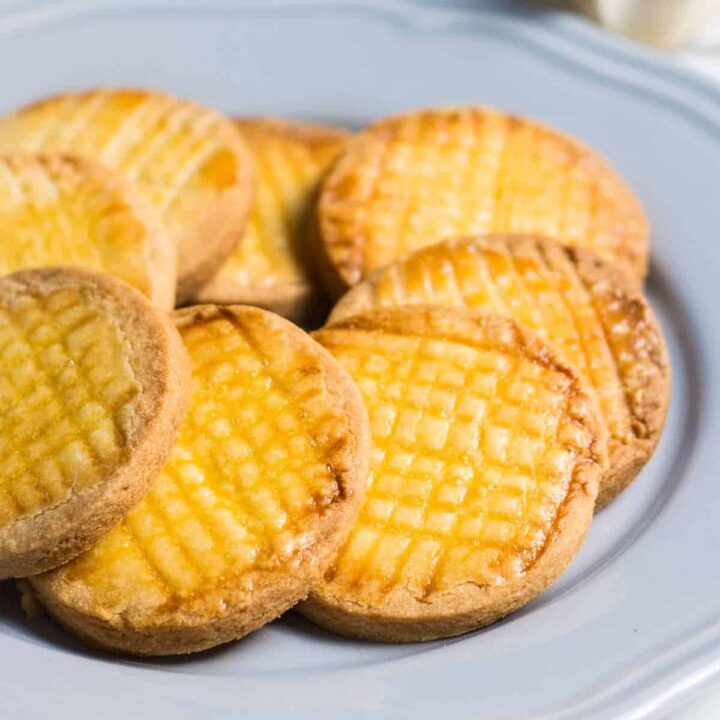
French Butter Cookies (Sable Breton)
Classic French butter cookies made with a shortbread-type of dough and salted butter.
Ingredients
- 1/2 cup + 1 tbsp granulated sugar
- 1/2 cup + 5 tbsp salted butter*
- 3 egg yolks, separated
- 1 tsp vanilla extract
- 2 cups + 2 tbsp all-purpose flour, plus more for dusting work surface
Instructions
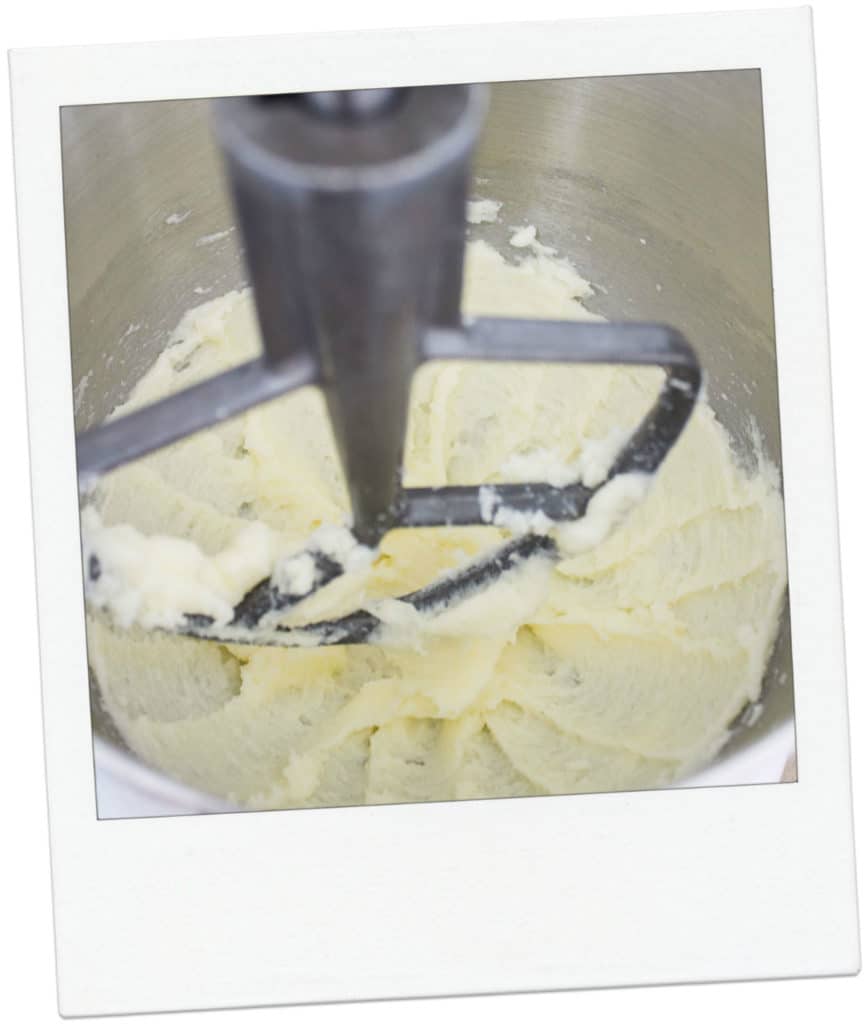
- Preheat the oven to 375°F (190°C). Line a baking sheet with parchment paper or a silicone mat. Beat the butter and sugar together on medium speed until light and fluffy - about 1 minute.
- Add 2 egg yolks and the vanilla extract, and mix on medium speed until they're incorporated. Stop to scrape the bowl with a rubber spatula before resuming the mixing. Add the flour in and mix on low speed just until the dough starts to clump together.
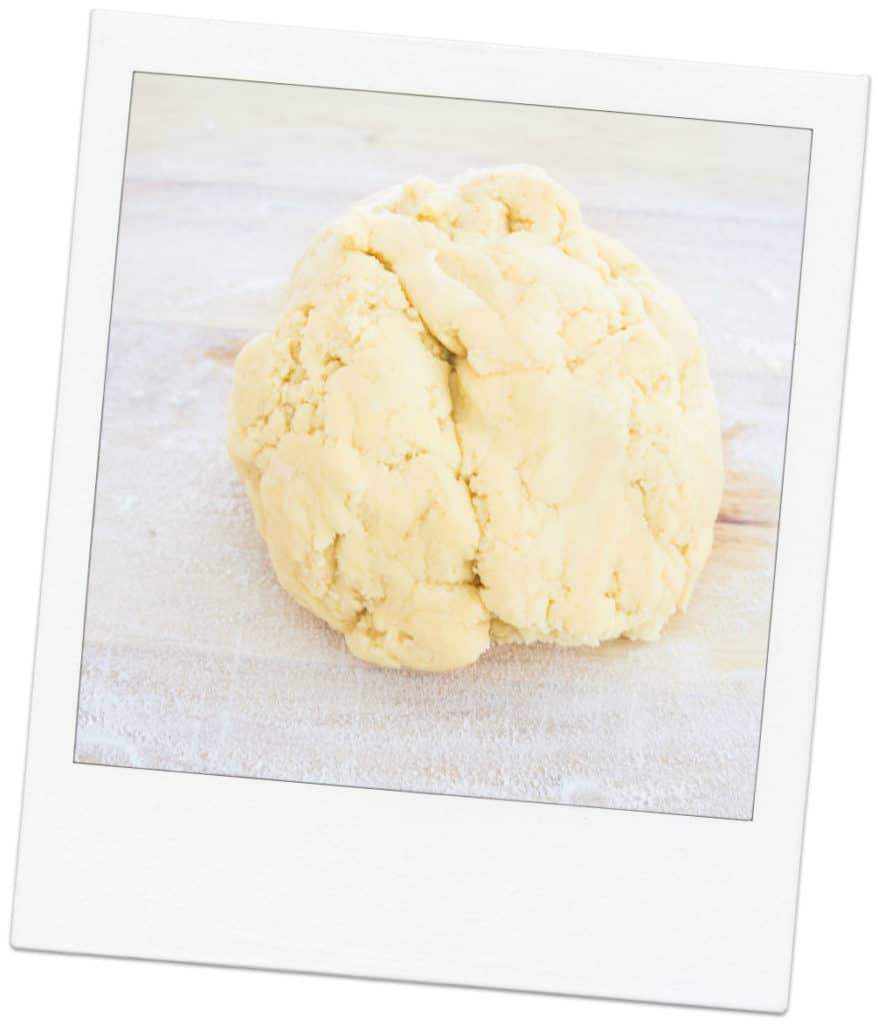
- Lightly flour a wooden board or counter before placing the mass of dough onto it. Use your hands to shape the dough into a big ball. Then sprinkle some flour on top of the dough before using a rolling pin to roll the dough out. As soon as the dough starts sticking to your pin, sprinkle a pinch of flour on the dough, then resume rolling. Roll your dough out until it's approximately 1/4" thick.
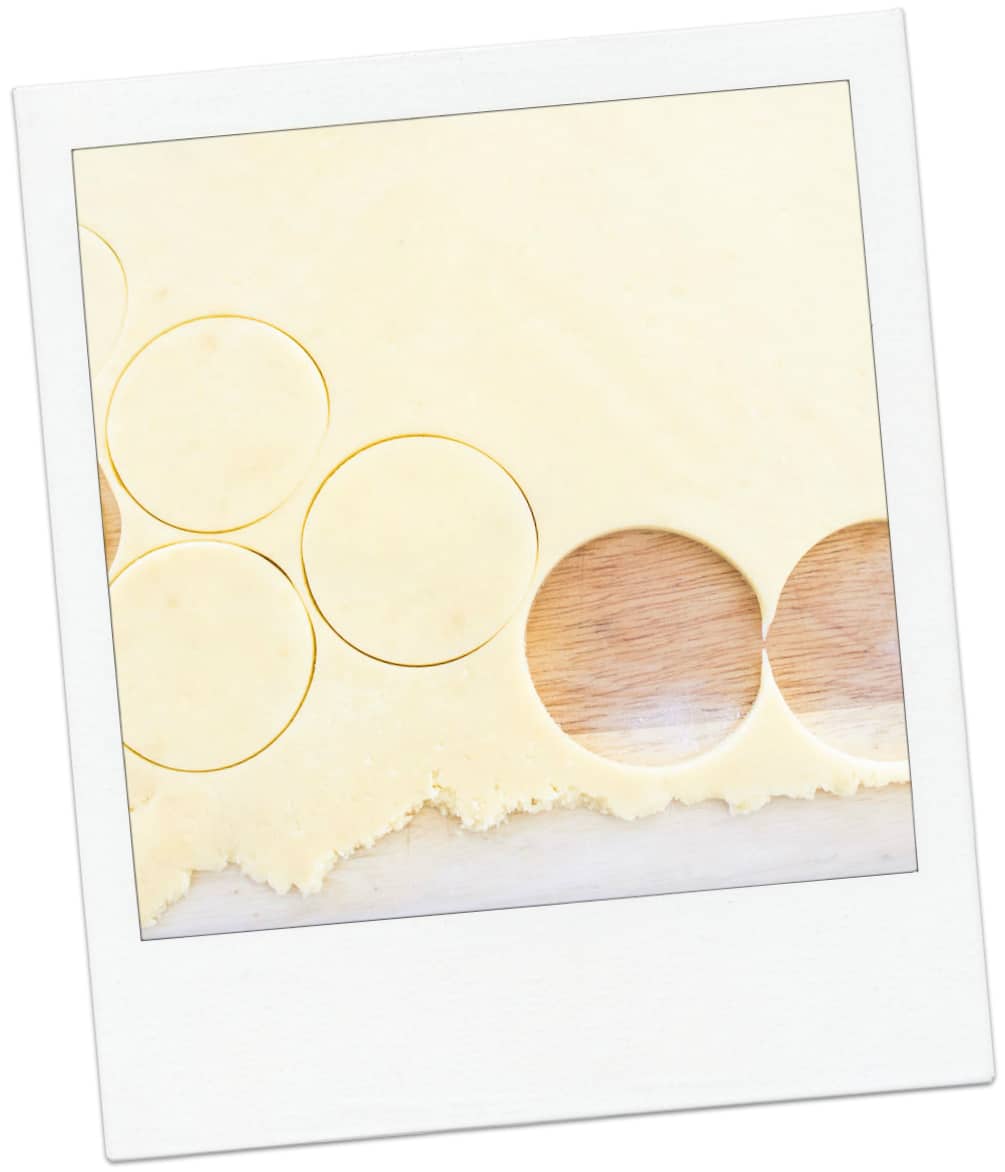
- Use medium round cookie cutters (2.25"/5.75 cm) to cut out round cookies from the dough. Use a sharp-edged spatula to transfer the cookie rounds onto the baking sheet. Place 12 cookies on the baking sheet, spaced out from each other. Beat the remaining yolk in a small bowl. Use a fork to make a cross-hatch pattern on the cookies (drag the fork down vertically on the cookie, then drag the fork across horizontally). Brush the tops of the cookies with the beaten egg yolk.
- Bake the cookies for 12 to 15 minutes, until they're a deep golden color. Transfer the cookies to a wire cooling rack to cool completely.
Notes
Typically, 1/2 a cup of salted butter contains 1/4 tsp of salt in the butter. Therefore, if you're using unsalted butter in this recipe, you'll want to add a scant 1/2 tsp of salt in the recipe.
Nutrition Information:
Yield: 20 Serving Size: 20 ServingsAmount Per Serving: Calories: 140
Hi, could you please answer Arnaz Dhanbhoora’s
April 18, 2021 at 11:44 am question about the gms of butter? I am curious as well.
Hi Teresa, please use 1/2 cup plus 5 tbsp of butter. The grams were created with a conversion tool, but you are right, they were slightly off for the butter (usually 1/2 cup butter is about 100 grams, so it would have been closer to like 170 grams rather than 200). Thanks!
Thank you so much! I’ve lined up all the ingredients and I’m ready to put my first batch together!
I bake these cookies fairly often, my favorite recipe , good proportions in ingredients, at times cut sugar to 1/3 cup.
I take them to friends and family as gifts and asked at all times for the recipe. Thank you for sharing this perfect recipe.
Hi Alina! I’m so glad your family and friends enjoy this recipe! 🙂 Thanks so much for coming back to leave a kind comment <3
I like to have to cookies with orange zest. Questions:
1. How much orange zest in Mg/oz or spoon measure do I put in?
2. When do I mix it in at the beginning when I mix sugar and butter or later on when I put in the egg yolks.
Thank
Ami Sasson
Hi Ami! I love orange zest too. I usually add the zest of 1 small to medium orange when I make cookie recipes. I never measure it out as it doesn’t need to be an exact science. 🙂 For optimal orange flavor, I recommend rubbing the zest into the sugar first (just using your fingers) to combine, then continuing on with the recipe card as stated to beat the sugar with the butter.
Thank you.
I will try it this weekend.
Best,
Ami
Thank you. I will be trying it this weekend.
Looks yummy!
I have a silly question to ask. When these are store bought and they’re very hard does that mean they’re over baked or possibly stale?
Hi Sylvia! No silly questions! I’m thinking that if it’s store-bought, it’s probably because the cookie is stale. Then again, it could be that their recipe causes the cookies to be over-baked but I would think that a cookie company would avoid that before packaging and selling the cookies. An ideal sablé is crisp, yet buttery and melts in your mouth. The ones I’ve had in Paris are always sold like that, but if you’re buying the cookies elsewhere in the world, maybe they’ve been sitting on the shelf too long.
Hi I have a box of the lemon shortbread cookies from La Mere Poulard… delicious! How can we incorporate lemon to this recipe? Thx
Hi Maggie! Usually the best way to incorporate lemon flavor is to include lemon zest, so you could do that. I might also add a little bit of lemon extract (maybe 1/4 tsp) to help amp up the lemon flavor. 🙂
can i color these with food coloring gel?
Hi Addie! Do you mean dye the dough or just decorating the top? If you mean dying the dough, then I don’t see why not as they’re simply a more crisp and buttery version of a sugar cookie, so it could work! I haven’t done this though so I can’t speak from experience. If you mean decorating the top, that should also work. Happy Holidays!
I’ve had these cookies for the first time in Paris and I was hooked at first bite and will definitely bake this.
I’ve had them in chocolate as well, how can I add chocolate?
Hi there! I have a chocolate sable cookie recipe you can find here! 🙂
Hi I was wondering if you could substitute the egg yolks with something else? Thanks!
Hi Veronica! The egg yolk plays a super important role in tenderizing the cookie so it doesn’t come out dense or chewy. I’ve never substituted them in a recipe like this, but people often recommend applesauce as an egg substitute (usually 1/4 cup applesauce per egg). Again, I can’t definitively say what the results will be but that’s just what I’ve heard! 🙂
Beta in your recipe you say to use 1/2 cup and 5 tablespoons butter or 200gms.
But 1/2 cup and 5 tablespoons butter is 188.9 gms. That’s roughly 189 gms of butter.
So which is correct 189g or 200g. ?
Would it make a difference to the cookie if the butter is 10 gms more or less????